

Tips for Securing Loads Safely on Flatbed Trailers
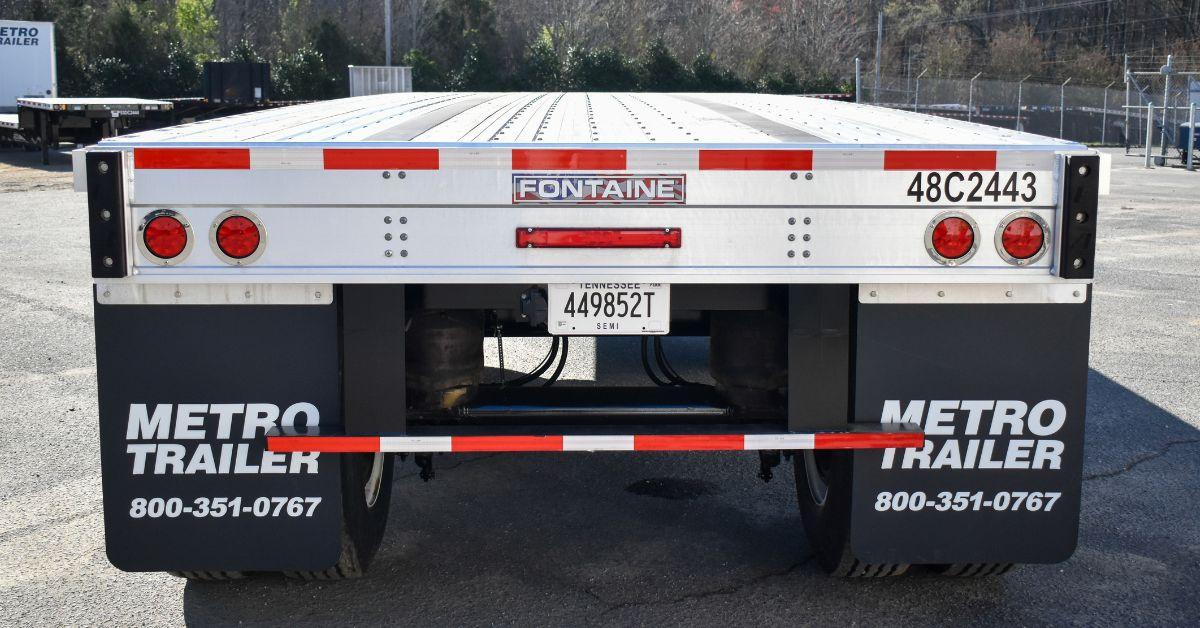
Some of the most notable benefits of flatbed trailers is that they're versatile, durable, and let you load from all four sides, compared to enclosed trailers that only have rear doors. But one challenge of keying these trailers is properly securing your load to the deck.
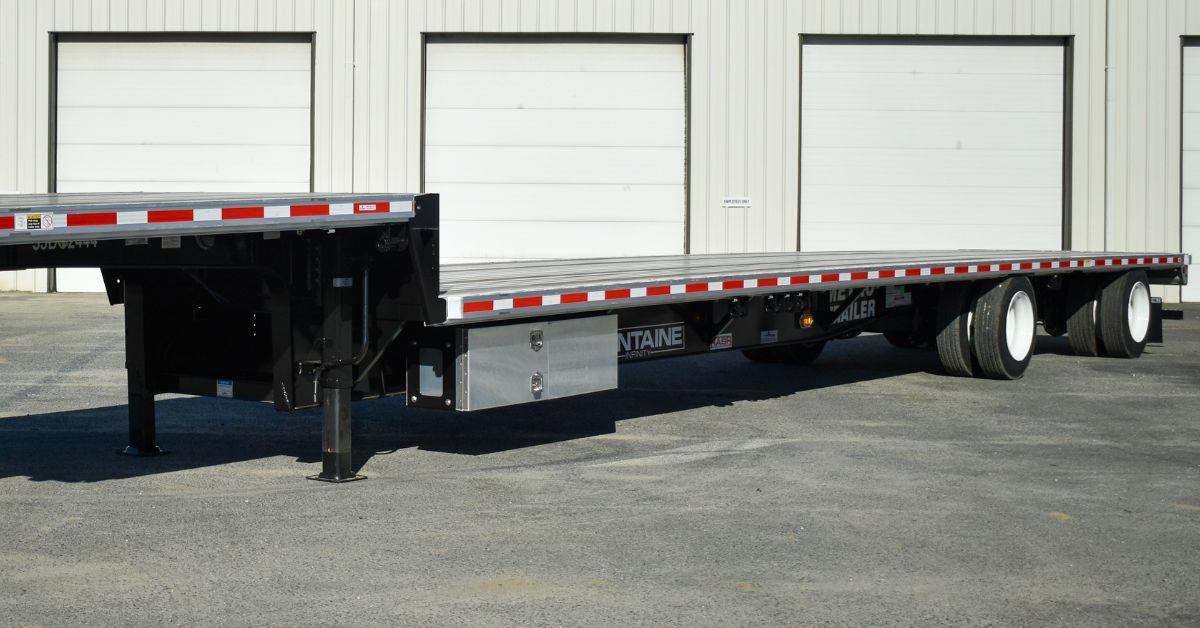
Flatbed trailers, as the name suggests, are flat, open, platforms with no walls or roof surrounding the base. To keep loads from falling off them, you use a strap or chain to tie them down. But if you do this incorrectly, the load could shift, tip over, or even fall off and cause a serious accident. To help you safely secure loads to a flatbed trailer for transportation, follow these tips.
Verify The Load Limit of Your Trailer
Before you even think about putting cargo on the deck, double-check your trailer's capabilities. Every trailer has a Gross Vehicle Weight Rating (GVWR), which tells you the maximum weight it can safely handle. Overloading isn't just illegal; it puts massive strain on your tires, suspension, and braking system.
If you exceed this limit, your load securement methods might fail simply because the trailer itself becomes unstable. Always account for the weight of the trailer itself plus the cargo. If you're hauling something incredibly heavy, like large machinery, make sure the deck is rated for concentrated loads, not just distributed weight.
Choose The Right Tie-Down Equipment
Not all tie-downs are created equal. The type of cargo you’re hauling dictates whether you should use straps, chains, or rope.
- Nylon Straps: These are fantastic for most general freight, lumber, and palletized goods. They’re strong but have a little give, and they won't damage softer materials.
- Chains: If you’re moving heavy equipment, steel pipes, or concrete blocks, use chains. They offer immense strength and durability against sharp edges.
- Rope: Generally, rope isn't recommended for heavy-duty commercial hauling because it lacks a verified working load limit rating, though it might be fine for light, personal loads.
Make sure whatever you choose has a Working Load Limit (WLL) that adds up to at least 50% of the weight of the cargo you’re securing.
Inspect Your Gear Before Every Trip
It's tempting to just grab your straps and go, especially when you're on a tight schedule. But a frayed strap or a chain with a cracked link can snap under tension.
Take a few minutes to look over every piece of equipment. Check ratchets for rust or stiffness. Look for cuts, burns, or abrasions on webbed straps. If a chain link looks bent or stretched, swap it out. It’s much cheaper to replace a strap than to deal with a lost load on the highway.
Distribute Weight Evenly
Where you place the cargo matters just as much as how you tie it down. You want to center the load on the trailer as much as possible to keep the center of gravity low and stable.
If you place too much weight on one side, the trailer is more likely to sway or tip during a turn. If you put too much weight all the way to the rear, you risk "fishtailing" at high speeds. Ideally, place the heaviest items over the axles to get the smoothest ride and the most effective braking.
Use Edge Protectors
If you’re hauling stacks of brick, lumber, or steel sheets, the friction from the road vibration can cause the strap to saw back and forth against the sharp edge of the cargo.
Edge protectors (or corner guards) are cheap plastic or metal sleeves that sit between the strap and the cargo. They distribute the pressure of the strap over a wider area to prevent damage to the cargo, and they stop the sharp edge from cutting through your strap.
Employ The Correct Number of Tie-Downs
There are regulations regarding how many tie-downs you need based on the length and weight of your cargo.
As a rule of thumb:
- Use one tie-down for articles 5 feet or shorter and weighing 1,100 lbs or less.
- Use two tie-downs if the article is 5 feet or shorter but weighs more than 1,100 lbs.
- Use two tie-downs for articles longer than 5 feet but shorter than 10 feet, regardless of weight.
- Add one additional tie-down for every additional 10 feet of length (or fraction thereof).
It never hurts to use an extra strap for peace of mind. Better safe than sorry.
Block And Brace Your Cargo
Sometimes straps alone aren't enough to prevent forward, backward, or sideways movement. Blocking and bracing can provide the necessary extra support.
Blocking involves nailing heavy pieces of wood into the trailer deck (if it’s wood) snugly against the cargo to prevent it from sliding. Bracing involves using supports to stabilize the upper parts of the load. This physical barrier acts as a second line of defense if the friction from the deck isn't enough to hold the items in place during a hard stop.
Check Securement After the First 50 Miles
Loads settle. Straps stretch. What seemed tight in the yard might be loose after hitting a few potholes.
Standard safety protocol recommends pulling over within the first 50 miles of your trip to check the tension on all your devices. You’ll be surprised how often a ratchet needs another click or two. After that initial check, re-check every 3 hours or 150 miles, or whenever you change your duty status.
Cover Proper Containment for Loose Items
If you’re hauling something that isn't a single solid unit—like gravel, sand, or construction debris—you need to contain it properly. Even bags of cement or small pipes can shift and bounce.
Use a tarp to cover these loads. You’ll need to tie it down securely. Pull on the corners and sides to make sure it's tight and won't flap in the wind. The tarp prevents debris from flying out and hitting the windshield of the car behind you.
Verify The Bulkhead Condition
The bulkhead (or headache rack) is the vertical barrier at the front of the flatbed, right behind the tractor cab. Its job is to stop heavy cargo from sliding forward and crushing the cab in the event of a sudden stop.
Before loading, check that your bulkhead is solid and securely attached. It needs to be strong enough to withstand the force of your cargo shifting forward. If your trailer doesn't have a bulkhead, you might need to use extra chains or blocking at the front of the load to compensate.
Safe Transport with Quality Rentals
These tips for securing loads safely on flatbed trailers will allow you to transport your freight from location to location without them sustaining damage or causing accidents in the process.
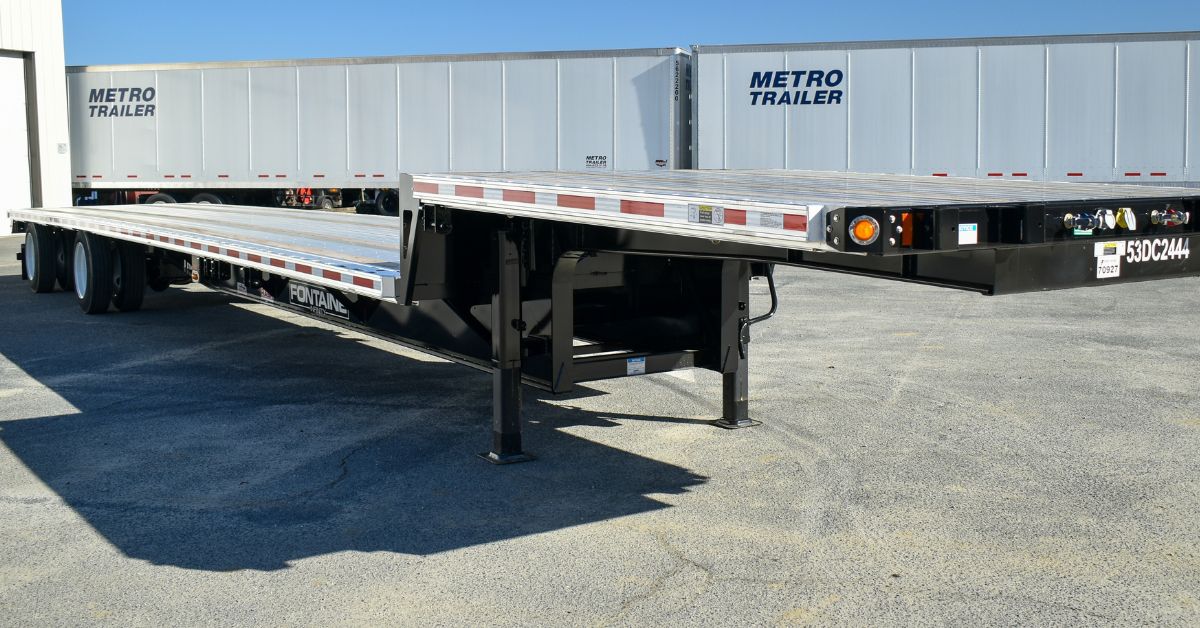
If you have heavy loads and need a flatbed semi-trailer rental to transport them, Metro Trailer has 48' and 53' options. Our rentals let you affordably and conveniently move material like lumber, steel, or machinery to where you need it to be. Request a free quote on a rental today, or don't hesitate to reach out to us if you have any questions about the flatbed semi-trailers we have available.